Halo Sobat ! | Members area : Register | Sign in
About me | SiteMap | Arsip | Terms of Use | Dcma Disclaimer

Footer

Powered by Blogger.

Social Icons

Featured Posts

Slider(Do not Edit Here!)

Minha lista de blogs

Publicidade 2

Cantinho do Blog

Parcerias

Hospedagens FREE

Dominios FREE

Publicidade 1

widget

Pojok Blog

Arsip

Sample text

Sample Text

Sample Text

Powered By Blogger
Powered By Blogger
Powered By Blogger

Perangkat SD

Perangkat SMP

Berita Pendidikan

Pengumuman

..::Aprendiz MUOnline::..

..::Ultimate Vendas::..

..::Central MU Online::..

..::Criando Portais::..

..::Viciados MU::..

..::Universe Divulgação::..

Visitor Counter

Google Search

..::Mixer Divulgação::..

You can replace this text by going to "Layout" and then "Page Elements" section. Edit " About "

..::Rádios Online::..

Recent Comments

..::Melhor Divulgação::..

..::Vermelho Divulgação::..

..::Extreme Divulgação::..

..::Control Downs::..

..::Divulgaçao::..

..::FreeXat parceiro top::..

..::Ciados MU Online::..

..::Nosso Banner no seu Site::..

About Me-

Seguidores

Seguidores

Social Icons

Musik

Translate

..::Majestic Hacker::..

..::Exclusivo MU Online::..

Translate to your language

Fox Life

Pages

Pages

Publicidade

Parceiros

Social Icons

Automation in Weaving Shed, Electronic Let-off, Take-up Mechanism andStop Motion

Tuesday, 4 February 2014

Automation in weaving shed:
Weaving is the most widely used method of fabric production for the decoration, clothing and home furnishing textile sectors. However, technical textiles, including wire cloth, are also produced on modern weaving machines.Irrespective of the weft insertion method used, very high cycle and acceleration rates are essential for weaving machines. Furthermore, weaving machines are characterized by a large number of nonlinear motion sequences and time-critical starting times. Mechatronic solutions devised from a combination of mechanical cams and servo drives for warp let-off and fabric take-up are the modern state of the art. More recently, harness motion and weft insertion have also been implemented with individual electric drives in some instances.

Electronic Let-off and Take-up Mechanism:

That type of let off motion in which the weaver’s beam is driven with the help of servo motor, as the beam diameter changes, r.p.m of the beam are controlled through load cell. Take-up which is responsible to draw the fabric from fell of cloth at regular rate (picks/inch) & to wind the cloth on cloth roller. It is synchronized with let off motion. The speed of take up is less than let off motion due to crimp of warp.
Figure : Electronic Let-off and Take-up Mechanism
Electronic Warp Stop Motion:
Every warp end is sensed by the single drop wire. When a warp thread or end breaks, the corresponding wire falls by gravity on contact bar and machine is stopped.

Electrical weft stop motion:
It is that type of secondary motion which is responsible to stop the machine when weft thread is broken.

Electromagnetic warp protector motion:
It is fitted on projectile looms or on high speed shuttle looms.

On-loom automation process:
Figure shows when loom is runinig,we can control our PC which things as below.
Self optimization of weaving process

Automation in Warping and Sizing Process

Tuesday, 28 January 2014

Automation in Warping Process:
Other typical features of a modern sectional wrapper are:
  • Feeler roller to apply material specific pressure to obtain exact cylindrical warp build-up;
  • Lease and sizing band magazines
  • Constant warp tension over the full warp width;
  • Automatic section positioning with photo-optical section width measurement;
  • Pneumatic stop brakes;
  • Warp tension regulation for uniform build-up; and
  • Automatic warp beam loading, doffing and chucking.
  • Head stocks are equipped with advanced design features such as precision direct drive, advanced electronics, smooth doffing and programmable breaking
  • Stop motion sensors are used when yarn breaks.
  • Automatic creel movement
  • Yarn length measuring devices are used to measure the warp yarn length.
Figure : Automation in warping process
Automation in Sizing Process:
Sizing machine control systems provide a tool for management to insure that all warps are sized identically under standard operating conditions. These monitoring and control capabilities can be included in a computer network of a weaving mill. For years knitting machine manufacturers have been making excellent use of electronics to provide machines that are more automatic and versatile and many refinements of these advances have been made. These automatic machines are already ‘islands of automation’ that can be incorporated into a CIM network. Automated weaving plants are on the drawing boards. None is yet in operation but should be a reality within a few years. The six production steps winding, warping, sizing, weaving inspection and packing include 16 points of automation. Of these, 12 deal with materials handling or transport. Only four applications deal with automating the machine operations themselves. This includes automated process control on the slasher of
  • Automation on creel zone by pneumatic cylinder
  • Control the tension of yarn by sensors or pendulum roller
  • Control the temperature and level of size paste in size box
  • Control the temperature and level of size paste in size cooker
  • In drying zone, control the temperature
  • Control the percentage of moisture content by sensor
  • Control the headstock system
Figure: Automation in sizing process

Automation in Winding Process

Sunday, 26 January 2014

Automation in Winding Process

Hafiz Abdul Mannan
National Textile University, Pakistan
Phone: 0092-3236052101


Automation Process in Winding:
The automation in winding increase the winding efficiency. Huge amount of yarn are winded than conventional system of winding for using automation. Labor cost also decrease by the using automation in winding. In another article, automation in weaving has discussed details.
Automation in Winding Process
1. Drum traverse system
  • The precise slit stainless drum guides the threads to wind up.
  • Cone winding process
  • Drum with special hardened polish treatment is good for high speed running and it can also lower the noise.
2. Individual touch panel control system
  • Preset the yarn length on touch panel of the cross cone winder, then the computer will measure it with compensates length adjustment. It’s accurate and reliable.
  • Preset the yarn deliver speed from 400~1400 meters per minute on touch panel and then run the constant yarn speed.
  • Preset the lube roller speed from 0~50 RPM for the lubricant percentages of the threads. The uniform lubricant throughout the packages of threads lubricated due to the constant yarn deliver speed.
  • Preset the product quantity; make it easy to manage the production efficiently.
3. Automatic bobbin magazine device
  • With non-bobbin detector and auto-stop system, the cone winder machine will shutdown when it stops bobbing.
4. Auto-Doffing and control system
  • Mechanical doffing system, precise and durable.
  • Doffing time 7~10 seconds.
5. Electronic magnetic tension device
  • Electronic magnetic tension controls the tension throughout the cycle of winding process to get the good quality of packages.
6. Auto circulating lube system and tank (Optional)
  • Auto circulating lube system filters the floss to ensure the lubricant quality given to lube with threads.
  • One lube tank can connect 20 spindles of 4 machines.
  • Hot lube system with heater control panel are available with option.
  • Density adjusting device, precise, stable and reliable.
  • With our yarn broke sensor, the automatic cone winder will stop automatically when the yarn is broken.
  • Computer auto-detect trouble happened and then display the reasons by caption, it’s easy to maintain the condition of machine.
  • Suitable for all sewing thread winding and available from 20/6 to 60/2 yarn counts. Nylon thread and viscose rayon thread…etc.
  • We can control the motor speed as its rpm
  • We can control package size automatically
  • We can control yarn clearing as thick ,thin places or slubs through yarn diameter
  • We can splice automatically if yarn breaks
  • We can change empty cones in cone magazine automatically. 
 

Automation Process in Weaving Machinery

Wednesday, 15 January 2014

Automation in Weaving Process
HAFIZ ABDUL MANNAN
National Textile University, Pakistan
Phone: 0092-3236052101


Process automation system:
A general technology term that is used to describe any process being automated through the use of computers and computer software. Processes that have been automated require less human intervention and less human time to deliver. A process control or automation system is used to automatically control a process such as chemical, oil refineries, paper and pulp factories. The PAS often uses a network to interconnect sensors, controllers, operator terminals and actuators. A PAS is often based on open standards in contrast to a DCS (distributed control system), which is traditionally proprietary.

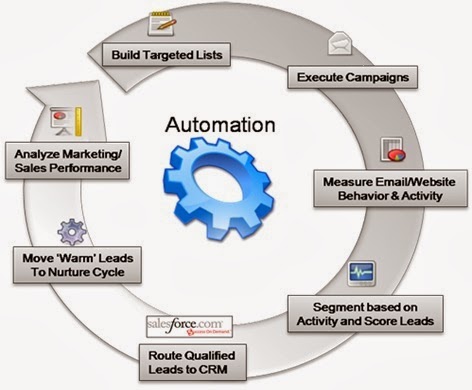
Figure01: automation process cycle
PAS is the lowest level of automation, while MES (manufacturing execution system) is considered to be directly positioned above a PAS.Process automation involves using computer technology and software engineering to help power plants and factories in industries as diverse as paper, mining and cement operate more efficiently and safely.[1]

Weaving process:
Weaving is the process of interlacing two set of threads together at right angles such that they form a unified fabric4. The two sets are defined as the warp and weft, and within each set the threads lie parallel to one another. During the weaving process, the warp is defined as the set being held stationary, while the weft is the set being introduced to the warp [2].

Automation in Weaving process:
Weaving technology has seen advancements, automatic shuttle looms and automatic shuttle-less looms (e.g., Methods of holding the yarn such as rapier and the gripper) with advantages of higher productivity, to water jet and air jet looms that use water or pressurized air to transport the yarn with multiple color weft insertion. Weaving and knitting machine builders have been leading the way in utilizing computer technology in textile manufacturing for many years with their use of CAD, bi-directional communication and artificial intelligence. A CAD system can be used to develop the fabric to be produced and the design can then be transmitted over the network to the production machines to produce the desired fabric. Now, the design instructions can even be sent by modem from one country to a weaving machine located anywhere else in the world.[2]

Figure02: Automation in Weaving
Sizing machine control systems provide a tool for management to insure that all warps are sized identically under standard operating conditions. These monitoring and control capabilities can be included in a computer network of a weaving mill. For years knitting machine manufacturers have been making excellent use of electronics to provide machines that are more automatic and versatile and many refinements of these advances have been made. These automatic machines are already ‘islands of automation’ that can be incorporated into a CIM network. Automated weaving plants are on the drawing boards. None is yet in operation but should be a reality within a few years. The six production steps winding, warping, sizing, weaving inspection and packing include 16 points of automation. Of these, 12 deal with materials handling or transport. Only four applications deal with automating the machine operations themselves. This includes automated process control on the slasher and the weaving functions of
  1. Automatic Pick Repair
  2. Automated Warp breakage Locator
  3. Computerized Machine Control. Manual assistance is still required for beam replacement and repair of warp breaks.
  4. Implementation of electronic control such as computer control in automatic looms has simplified operations as only the conditions such as yarn type and weave, width need to be input in order for the optimum operations to be performed.
Machine requirements in Weaving Automation:
Weaving is the most widely used method of fabric production for the decoration, clothing and home furnishing textile sectors. However, technical textiles, including wire cloth, are also produced on modern weaving machines.

Irrespective of the weft insertion method used, very high cycle and acceleration rates are essential for weaving machines. Furthermore, weaving machines are characterized by a large number of nonlinear motion sequences and time-critical starting times. Mechatronic solutions devised from a combination of mechanical cams and servo drives for warp let-off and fabric takeup are the modern state of the art.More recently, harness motion and weft insertion have also been implemented with individual electric drives in some instances.[3]

The demands on the automation are:
  • Constant velocity relation between warp let-off and fabric take-up as a function of the main drive
  • Constant thread tension during the process (uniform fabric quality)
  • Weft insertion synchronized precisely with cycle times
  • Fast position-oriented supply of weft threads corresponding to the color selection
  • Increase in machine cycle times
  • Different weft insertion processes using a projectile, airjet, or picker
  • Short resetting times for lot changes
  • Reproducibility of process data
  • Pattern data management and preparation
Figure 03: Operating principle of the weaving machine
Benefits of automation process:
The automation solution described below offers the following advantages:
  • To attain even faster resetting times, the mechanical cam can be replaced by a high resolution SIMOTION cam function for harness motions. 
  • The technology functions integrated in SIMOTION, particularly the electronic cam, make it easy to implement the required motion control easily and safely for the process. Furthermore, where necessary, they allow motion profiles to be modified flexibly and with minimum effort. 
  • Variable user interfaces enable process parameters to be quickly adapted to the execution system. These data can be reproduced at any time and assigned according to process technology. A lot change no longer requires you to make manual adjustments. 
  • Tools for commissioning, configuration and diagnostics integrated in the uniform, scalable SCOUT engineering system reduce service and configuration times.
Drive System
The integrated automation and drives structure is rounded off by the bus-coupled dynamic SINAMICS S120 drive system and SIMOTICS S‑1FT7/1FK7 motors.

Features of the automation solution:
  1. Constant thread tension control during the winding and unwinding process, correct provision of thread and accurate positioning when entering the weft are closely coupled to the process control and are processed synchronously with the machine cycle. These control functions are performed by a SIMOTION D4x5‑2.
  2. A master that obtains its actual values from an encoder mounted on the main shaft, outputs appropriate setpoint signals to the slaves of the drive and control system.
  3. Coupling through an OPC interface (Ethernet) ensures operating data management and exchange of data with the pattern system.
Figure04: Example of automation solution with SIMOTION D4x5‑2
Woven sample digitized artwork:
With the help of computer system,we can analyze the woven sample digitized artwork instead of real fabric.We can see image disply on-screen than after making fabric. We can weave slection and sample matching on screen.
Figure 05: Comparison between real fabric and digitized artwork
Analyzing the fabric faults by X-Ray emitter:
When fabric passes through from fabric take-off to fabric beam,we can analyze the fabric faultes by X-Ray emitter.We has not to see the fabric beam by naked eye ,we can find out faultes by using automation process[4].
Figure 06: Analyzing the fabric faults by X-Ray emitter
Controlling one or several looms/sizing machines:
We can controle one or more looms/sizing machines by our PC.we can controle our system in our room instead of go to machines.
Figure07: Controlling one or several looms/sizing machines
Sketch jacard design on image processor:
By automation process,we can analyses sketch design on computer screen as image processor.
Figure08: Sketch jacard design process on image processor
Comparison between manual designing and computer designing:
Flowchart09: of manual designing and computer designing
On-loom automation process:
Figure shows when loom is runinig,we can controle our PC which things as below.
Figure 10: Self-optimization of the weaving process
Why is Automation Important in the Weaving Sector?
Global competition ensures that only the fittest survive. Today’s weaver needs to ensure that he/she is able to manufacture and supply the finest quality of fabric, at the lowest cost, in the shortest possible time-frame. Automation is the only option which will allow the weaver to attain this objective.

Conclusion:
Automation has resulted in control of machines electronically from user friendly interfaces, produce intricate jacquard fabrics at the speed of commodity fabrics, inspect fabrics on loom, use optical and laser detection of warp break, reduce downtime due to higher levels of automation and quick style and warp beam change. The machine speed upto 1000 rpm is possible, 5 to 10 times faster than 20 years ago.

References :
  1. The Automation of Weaving: an examination of the past and future of loom design by Wendy C. Beatty  Union College, 807 Union Street, Schenectady NY,
  2. https://eb.automation.siemens.com/mall/en/WW/Catalog/Products/10087619;sited on :08/01/2014 
  3. http://textilelearner.blogspot.com/2013/08/automation-in-weaving-process-why-is.html 
 

Automation in Weaving Process | Why is Automation Important in the Weaving Sector?

Thursday, 29 August 2013

Automation in Weaving:
Weaving technology has seen advancements, automatic shuttle looms and automatic shuttle-less looms (e.g., Methods of holding the yarn such as rapier and the gripper) with advantages of higher productivity, to water jet and air jet looms that use water or pressurized air to transport the yarn with multiple color weft insertion. Weaving and knitting machine builders have been leading the way in utilizing computer technology in textile manufacturing for many years with their use of CAD, bi-directional communication and artificial intelligence. A CAD system can be used to develop the fabric to be produced and the design can then be transmitted over the network to the production machines to produce the desired fabric. Now, the design instructions can even be sent by modem from one country to a weaving machine located anywhere else in the world. 
Automation in Weaving
Sizing machine control systems provide a tool for management to insure that all warps are sized identically under standard operating conditions. These monitoring and control capabilities can be included in a computer network of a weaving mill. For years knitting machine manufacturers have been making excellent use of electronics to provide machines that are more automatic and versatile and many refinements of these advances have been made. These automatic machines are already ‘islands of automation’ that can be incorporated into a CIM network. Automated weaving plants are on the drawing boards. None is yet in operation but should be a reality within a few years. The six production steps winding, warping, sizing, weaving inspection and packing include 16 points of automation. Of these, 12 deal with materials handling or transport. Only four applications deal with automating the machine operations themselves. This includes automated process control on the slasher and the weaving functions of (1) Automatic Pick Repair (2) Automated Warp breakage Locator and (3) Computerized Machine Control. Manual assistance is still required for beam replacement and repair of warp breaks.

Implementation of electronic control such as computer control in automatic looms has simplified operations as only the conditions such as yarn type and weave, width need to be input in order for the optimum operations to be performed.

Automation has resulted in control of machines electronically from user friendly interfaces, produce intricate jacquard fabrics at the speed of commodity fabrics, inspect fabrics on loom, use optical and laser detection of warp break, reduce downtime due to higher levels of automation and quick style and warp beam change. The machine speed upto 1000 rpm is possible, 5 to 10 times faster than 20 years ago.

Why is Automation Important in the Weaving Sector? 
Global competition ensures that only the fittest survive. Today’s weaver needs to ensure that he/she is able to manufacture and supply the finest quality of fabric, at the lowest cost, in the shortest possible time-frame. Automation is the only option which will allow the weaver to attain this objective.

Author of This Article:
S. M. Hossen Uzzal 
B.Sc. in Textile Technology 
Monno Fabrics Ltd. Manikgonj 

Automation in Yarn Manufacturing / Ring Spinning / Cotton Spinning

Friday, 12 July 2013

Automation in Ring Spinning
S. M. Hossen Uzzal
B.Sc. in Textile Technology
Monno Fabrics Ltd. Manikgonj
Email: uhossen@gmail.com


Introduction:
In any manufacturing industries, final goal that everyone strives for is to make completely automatic machinery that takes in raw material on its one end and delivers finished product from the other end. Increase the productivity and maintain the supreme quality is only possible when are used automation properly. Automation is widely used in different branches of textile manufacturing process. Among the different branches of textile automation is hugely used in spinning technology.
Automation in ring spinning
In yarn producing technology in textile industries ring frame is one of the most important component. During the last two decades components of ring spinning machines have been greatly improved, changes in drafting system, drive systems and robotics have enabled large gains in productivity, flexibility and quality. Most of the technical advances in ring spinning were aimed at improving the performances on the existing technology. These are all achieved by the Automation.

Automation in Yarn Spinning:
A yarn test that used to take hours to perform 20 years ago can now be done in a matter of seconds using the HVI system. This process has been achieved through constant innovation and updated automation in the plant capacities. They are pointed out below:

1. Yarn forming process has seen advancements and automation by introduction of newer methods of spinning apart from ring spinning like open-end spinning, airjet spinning and Murata Vortex System(MVS)

2. Cotton mixing in blow room has been automated so that cotton from several bales can be drawn and mixed together, forming a more homogeneous mixing of cotton, thus reducing batch to batch variation in cotton spun yarn lots.

3. Carding machines using chute feed systems, auto levelers for improvement in quality or productivity and reduced handling have helped in increasing evenness in the yarn.

4. The ring spindle speeds have gone upto 20,000 and high-speed rotors upto 1,00,000 rpm are available. Today, spinning machines can produce yarns upto 20 times faster than what they used to produce 20years ago.  
 
5. Autoconers with splicing and yarn fault detection have been devised to obtain yarns with lower unevenness and better quality.

Advantages of Automation in Ring Spinning:
  1. Very reliable system.
  2. Controlled by servomotor and servo drive.
  3. Setting alteration by key pad data entry.
  4. No special skill needed for setting
  5. This system is still little expensive to implement
  6. Assy time reduces enhancing manufacturing capacities.
  7. Setting done at the press of a button.
  8. No special skill needed for setting
  9. Combines the advantages of the servo drive system and at the same time is cost effective.
  10. All rollers driven by individual motors, controlled by individual drives.
  11. Possible to alter draft and twist from the key pad. Fine tuning of twist & draft adjustments possible.
  12. Possible to manufacture fashion yarn like multi twist , multi count , slubyarn.
  13. Interfacing & drive communication through Profibus and other types of protocols makes controls simple and very accurate.
  14. Automatic Doffer system is now gaining customer acceptance.
  15. Reduced manpower requirement.
  16. Increase machine productivity.
  17. Reduce need for supervision.
  18. Increase life of components and accessories like spindle & bobbins. 
 

Automation in Fiber Manufacturing Process

Thursday, 11 July 2013

Automation in Fiber Production
Noor Ahmed Raaz
B.Sc. in Apparel Manufacturing
Asst. Merchandiser
Opex Sinha Group, Narayongonj
Email: raju.uttara72@yahoo.com


Introduction:
Automation is concerned with the application of machines to tasks once performed by humans or, increasingly, to tasks that would otherwise be impossible. Although the term mechanization is often used to refer to the simple replacement of human labor by machines, automation generally implies the integration of machines into a self-governing system. In most sectors of textile manufacturing, automation is one major key to quality improvement and cost competitiveness. Now automation is remarkably used in cotton picking, ginning etc.

Automation in Fiber Manufacturing:
Now a days automation is widely used in fiber manufacturing system. In case of increasing emphasis on product uniformity and adherence to quality standards continues to require fiber diameter monitoring, temperature and tension control, and monitoring of the solution properties of the polymer.
Automation in fiber process
Today, it is possible to find commercial examples for spin draw- wind, spin- draw-warp and spin-draw textile processes. These technologies place a different emphasis on material handling requirements; robotic technologies for package doffing and transport are increasingly available and yet because of the linking of processes, need be placed only at critical points in the overall process. The emphasis on flexible manufacturing, even in the fibre industry, has led to the development by some fibre producers of robotic techniques for the rapid change and replacement of spin packs and spinnerets. In these examples, robots are called upon to do what humans cannot do - change hot parts before they have cooled.

Automated inspection of yarn packages for broken ends, poor package building, and improper tensions and misidentified packages is a goal being pursued by a number of fiber producers. The history of the man-made fibre industry has emphasized process control more than any other segment of the textile operation. Increasing emphasis on product uniformity and adherence to quality standards continues to require fibre diameter monitoring, temperature and tension control, and monitoring of the solution properties of the polymer.

These requirements are especially critical in micro-denier fibre extrusion, a process that produces fibres and eventually fabrics of truly different properties.

Why Automation is Necessary in the Textile Industry?

Wednesday, 10 July 2013

Automation:
Automation is a technology dealing with the application of mechatronics and computers for production of goods and services. It is one the major key to quality improvement and cost competitiveness. In the last couple of decades, automation in textile industry has taken place in all the processes involving textile manufacture i.e. cotton picking, ginning, spinning, weaving, and processing and even to some extent in garment making, resulting in enormous gains in productivity and efficiency.
Automation in ring frame
Automation is broadly classified into:
  1. Manufacturing automation and 
  2. Service automation
Examples:
Robots, CNC machine tools, ASRS, security systems, CAD/CAM systems, logistics support tools, automated inspection systems, material handling systems

Types of Automation:

Fixed automation:
  • Custom-engineered, special-purpose equipment to automate a fixed sequence of operations (high production rates, inflexible product design)
Programmable automation:
  • Equipment designed to accommodate a specific class of product changes (batch production, medium volume)
Flexible automation:
  • Designed to manufacture a variety of products or parts (low production rates, varying product design and demand)
Reasons for Automation is Need in the Textile Industry:
Shortage of labor
  • The ratio of the number of workers to the number of retirees.
High cost of labor
  • May not always make sense to establish plants in countries with low labor costs
Increased productivity
  • Value of output per person per hour increases
Lower costs
  • reduced scrap rate
  • lower in-process inventory
  • superior quality
  • superior quality
  • shorter (compact) lines
Reducing manufacturing lead time
  • respond quickly to the consumers’ needs
  • rapid response to changes in design
Competition
  • lower prices, better products
  • better image
  • better labor relations
Safety

New process technologies require automation
  • e.g., robot controlled thermal spray torch for coating engine blocks with steel with atomized steel particles
Potential for mass customization

For the above facilities, automation is widely used in:
  1. Automation in Fiber Production/Manufacturing
  2. Automation in Yarn Manufacturing
  3. Automation in Fabric Manufacturing
  4. Automation in Dyeing/Wet Processing
  5. Automation in Apparel Manufacturing
  6. Automation in Textile Testing and Quality Control