Halo Sobat ! | Members area : Register | Sign in
About me | SiteMap | Arsip | Terms of Use | Dcma Disclaimer

Footer

Powered by Blogger.

Social Icons

Featured Posts

Slider(Do not Edit Here!)

Minha lista de blogs

Publicidade 2

Cantinho do Blog

Parcerias

Hospedagens FREE

Dominios FREE

Publicidade 1

widget

Pojok Blog

Arsip

Sample text

Sample Text

Sample Text

Powered By Blogger
Powered By Blogger
Powered By Blogger

Perangkat SD

Perangkat SMP

Berita Pendidikan

Pengumuman

..::Aprendiz MUOnline::..

..::Ultimate Vendas::..

..::Central MU Online::..

..::Criando Portais::..

..::Viciados MU::..

..::Universe Divulgação::..

Visitor Counter

Google Search

..::Mixer Divulgação::..

You can replace this text by going to "Layout" and then "Page Elements" section. Edit " About "

..::Rádios Online::..

Recent Comments

..::Melhor Divulgação::..

..::Vermelho Divulgação::..

..::Extreme Divulgação::..

..::Control Downs::..

..::Divulgaçao::..

..::FreeXat parceiro top::..

..::Ciados MU Online::..

..::Nosso Banner no seu Site::..

About Me-

Seguidores

Seguidores

Social Icons

Musik

Translate

..::Majestic Hacker::..

..::Exclusivo MU Online::..

Translate to your language

Fox Life

Pages

Pages

Publicidade

Parceiros

Social Icons

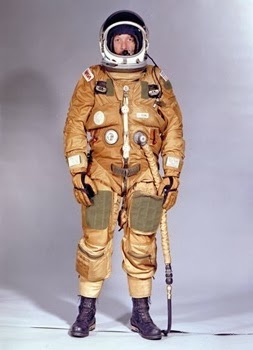
Protective Clothing for Space Shuttle

Wednesday, 22 January 2014

1. Introduction:
For the outer space shuttle traveler NASA (National aeronautic space authority) has prescribed clothing of special property to protect the space travelers for the harmful environment in the outer space. Two ply fabrics is used for the clothing. The chemically treated cotton fabric plies are 244 grams per square yard satin, 153 grams per square yard weft sateen and 187 grams per square yard mercerized knitted single jersey fabrics. These fabrics are flame retardant finished with THPOS/NH3 and DAP/Urea in two steps. As a result, these type of clothing shows better flame retardancy and burning retardancy property, which is approved by NASA.Such type of fabric are categorized in technical textile.
Space shuttle cloth
At the time of lunching space shuttle, to dissipate surface temperature of space shuttle, water filled bag made of rip-stop nylon fabric is used on its surface. For the outer space shuttle traveler, a special type of clothing has been made.

While early space suits were made entirely of soft fabrics, today’s Extravehicular Mobility Unit (EMU) has a combination of soft and hard components to provide support, mobility and comfort. The suit itself has 13 layers of material, including an inner cooling garment (two layers), pressure garment (two layers), thermal micro meteoroid garment (eight layers) and outer cover (one layer).

2. The materials used in space shuttle cloth include:
  • Nylon tricot
  • Spandex
  • Urethane-coated Nylon
  • Dacron
  • Neoprene-coated Nylon
  • Mylar
  • Gortex
  • Kevlar (material in bullet-proof vests)
  • Nomex
3. There are four theoretical approaches to suit design:

3.1 Soft suits
Soft suits typically are made mostly of fabrics. All soft suits have some hard parts; some even have hard joint bearings. Intra-vehicular activity and early EVA suits were soft suits.
 
3.2 Hard-shell suits
Hard-shell suits are usually made of metal or composite materials and do not use fabric for joints.
 
3.3 Hybrid suits
Hybrid suits have hard-shell parts and fabric parts.
 
3.4 Skin tight suits
Skintight suits, also known as mechanical counter pressure suits or space activity suits are a proposed design which would use a heavy elastic body stocking to compress the body.

4. Advantages of Space shuttle cloth:
  • The space suit provides air pressure to keep the fluids in body.
  • Most space suits provide a pure oxygen atmosphere for breathing.
  • Space suits use lithium hydroxide canisters to remove carbon dioxide.
  • To cope with the extremes of temperature, most space suits are heavily insulated with layers of fabric and covered with reflective outer layers (Mylar or white fabric) to reflect sunlight.
  • To protect the astronauts from collisions with micro meteoroids, space suits have multiple layers of durable fabrics such as Dacron or Kevlar.
  • Modern space suit helmet coverings have mounted lights so that the astronauts can see into the shadows.
  • To help this problem, space suits are equipped with special joints or tapers in the fabric to help the astronauts bend their hands, arms, legs, knees and ankles.
5. Disadvantages of Space shuttle cloth:
  • In weightlessness, it is difficult to move around.
  • Space suits offer only limited protection from radiation.
6. Uses:
Astronauts wear space suit during launch and landing of the space shuttle. Astronauts used for spacewalks.

Reference:
  1. http://www.nasa.gov/audience/forstudents/5-8/features/what-is-a-spacesuit-58.html#.UtI4RM6_7IU
  2. http://en.wikipedia.org/wiki/Space_suit
  3. http://Space%20suit%20-%20Wikipedia,%20the%20free%20encyclopedia.htm
  4. http://depts.washington.edu/matseed/mse_resources/Webpage/Space%20Shuttle%20Tiles/Space%20Shuttle%20Tiles.htm
  5. http://en.wikipedia.org/wiki/Space_Shuttle_thermal_protection_system
  6. Garments Merchandising by Professor M.A.Kashem 
 

An Assignment on Welding Cloth

Monday, 20 January 2014

1. Clothing for Welding:
In May of 2008, The American Welding Society made several recommendations in regards to welding and cutting protective clothing. According to Safety and Health Fact Sheet No. 33, welding apparel should allow freedom of movement, yet cover all areas of exposed skin. Long sleeve shirts and pants that overlap the tops of your boots are recommended. Fabric should be heavy cotton or wool and be free of holes, tears, and frayed edges. Welding dress should change immediately if water, grease, oil, or solvent is spilled on clothing.
A welder wearing welding cloth
1.1 The best materials for welding clothing include the following:

1.1.1 Denim:
While not optimal for welding operations, denim is a thick, rugged material that will protect welders in operations that are low in volume and intensity.

1.1.2 Cotton:
Cotton welding clothing provides economical protection from flame, sparks and molten splash. FR cotton has been chemically treated to withstand heat. Cotton fabric dresses are breathable, lightweight alternative to leather. Material remains flame resistant for up to 50 washings.

1.1.3 Leather:
Welding leather clothing is made from premium heavy side split cow leather. Chrome tanned to assure softness and durability while resisting heat, sparks, slag and cuts. All seams are double lock stitched and sewn with Kevlar thread.

1.1.4 Rubber:
Rubber is not a material typical for welding jackets or caps, but does find use in welding chaps, boots, and boot covers.

1.1.5 Synthetic Materials:
Synthetic materials are a problem because they will melt and cause severe burns on your skin. Cotton clothing will be damaged by sparks and slag, but cotton will just smoulder.
 
2. Items of Welding Apparel
2.1 Welding Jackets
Welding jackets are typically quite heavy and are made of leather. They offer a significant amount of protection, but they aren’t necessarily the best choice for welding in a warmer climate. Jackets extend from the neckline to the waistline, while also providing sleeves for the welder’s arms. Collars will help guard the worker’s neck area. Half-jackets either do not terminate protection at the abdomen or do no protect the welder’s back. These are frequently sized by chest thickness.
Welding jackets
2.2 Welding Bibs
Welding bibs are strapped around the neck, offer sufficient protection to the lower neck and upper chest, but zero protection anywhere else.
Welding bibs
2.3 Welding Aprons
Aprons are not typically sized, but offer standardized lengths with adjustable neck straps. They offer sufficient protection from the chest to the knee, but do not cover shoulders or arms.
Apron
2.4 Leggings:
Leggings are sheaths meant for the protection of the shins only, similar to greaves. Denim is the most common material for leggings, and these usually employ a fastening mechanism such as a spring-loaded strap or Velcro.
Leggings
3. Advantages for welding cloth:
  • Welding cloth is made from heavyweight; tightly woven, 100% wool or cotton to protect from UV radiation, hot metal, sparks and open flames. Flame retardant treatments become less effective with repeated laundering.
  • For wearing long-sleeved shirts with buttoned cuffs and a collar to protect the neck. Dark colours prevent light reflection.
  • For wearing high top boots fully laced to prevent sparks from entering into the boots.
  • For wearing fire-resistant boot protectors or spats strapped around the pant legs and boot tops, it prevents sparks from bouncing in the top of the boots.
  • For wearing gauntlet-type cuff leather gloves or protective sleeves of similar material, it protects wrists and forearms. Leather is a good electrical insulator if kept dry.
  • For wearing leather aprons it protect one’s chest and lap from sparks when standing or sitting.
  • For wearing layers of clothing. It prevents sweating, avoid overdressing in cold weather.
  • For wearing fire-resistant skull cap or balaclava hood under your helmet to protect your head from burns and UV radiation.
  • For wearing a welder’s face shield to protect your face from UV radiation and flying particles.
4. Disadvantages for welding cloth :
  • Sweaty clothes cause rapid heat loss.
  • Leather welding jackets are not very breathable and can make you sweat if you are overdressed.
  • For wearing clothing made from synthetic or synthetic blends. The synthetic fabric can burn vigorously, melt and produce bad skin burns.
5. Awareness for welding cloth:
  • Keep clothing clean and free of oils, greases and combustible contaminants.
  • Tape shirt pockets closed to avoid collecting sparks or hot metal or keep them covered with flaps.
  • Pant legs must not have cuffs and must cover the tops of the boots. Cuffs can collect sparks.
  • Repair all frayed edges, tears or holes in clothing.
  • Remove all ignition sources such as matches and butane lighters from pockets. Hot welding sparks may light the matches or ignite leaking lighter fuel.
  • Direct any spark spray away from your clothing.
  • Do not wear rings or other jewellery.
Reference:
  1. http://www.globalspec.com/learnmore/manufacturing_process_equipment/safety_personal_protective_equipment/welding_jackets_clothing
  2. http://www.ccohs.ca/oshanswers/safety_haz/welding/ppe.html
  3. http://www.weldmyworld.com/blog/2011/11/the-best-clothing-and-safety-gear-for-welding.html
  4. www.weldmyworld.com/blog/2011/12/welding-resources-welding-safety-apparel.html
  5. http://www.arcraftplasma.com/welding/weldingdata/generalsafety.htm 
 

What is Composite | Textile Structural Reinforced Composites

Sunday, 19 January 2014

An Assignment on Composite Material
Abinaya
Senior Executive, MNC, India
Email: aglaia.abi@gmail.com


Composites
The term composites originally arose when two or more materials where combined or bonded together to form a heterogeneous mixture in order to rectify some shortcoming of a particularly useful component. Different research workers have given different definition of composites. Among this the definition given by George Lubin (1969) is that a composite material is created by the synthetic assembly of two or more components (selected filler or reinforcing agent and compatible matrix binder) in order to obtain specific characteristics and properties.
Textile composite
Composite materials have a bulk phase, which is continuous, called the matrix, and one or more dispersed, non-continuous phases, called the reinforcement, which usually has superior mechanical orthermal properties to the matrix. The region between the two can be simply a surface, called an interface, or a third phase, called an interphase.

1.1 Classification of Composites
Classification of Composites
Composites can be classified on the basis of their structural components and the matrix, according George Lubin (1989) the composites can be classified based on the structural components used as,
  • Fibrous (composed of fibres in a matrix) composites
  • Laminar (composed of layers of materials) composites
  • Particulate (composed of layers of materials ) composites
Particulate composites can be further subdivided into,
  • Flake ( flat flakes in a matrix)
  • Skeletal (composed of a continuous skeletal matrix filled by Second material).
Based on the matrix used composites can be classified as thermoplastic Composites and thermosetting composites.

1.1.1 Thermoplastic composites
Compared to thermosetting composites, a thermoplastic composite has the following major advantages.
  • Heating or steaming will not make the composites brittle.
  • Shorter cure cycle and
  • Ability to recycle.
According to Huang Gu et al (2007) thermoplastic composites have the following advantages.
  • High impact strength
  • Tolerance for damage is high
  • Low price and recyclable.
  • Thermoplastic matrix can withstand high temperatures and still possess good flow property.
1.1.2 Thermosetting composites
Composites which are produced using the thermoset matrix are named as thermoset composite. Thermoset matrix additionally requires hardener for making the composites and it also requires the curing. This will automatically increases the production cost and processing time.The degree of wetting during the production
process is important for a good adhesion between reinforcement and matrix.

When applying thermosets the viscosity can be lowered, this helps in better wetting between reinforcement and matrix. One of the biggest disadvantages of thermoset composites are once it is cured it cannot be reformed into another shape.

1.2 TEXTILE STRUCTURAL REINFORCED COMPOSITES
Textile structural composites represent a class of advanced materials, which are reinforced with textile preforms for structural or load bearing applications. Presently, textile structural composites are part of a larger category of composite materials (Shishoo et al 1971 and Wiemer et al 2000). In general,composites can be defined as a selected combination of dissimilar materials with a specific internal structure and external shape. The unique combination of two material components leads to singular mechanical properties and superior performance characteristics not possible with any of the components alone.

Additionally composite materials are often overwhelmingly superior materials (e.g. metals) on strength to weight or stiffness to weight basis(Kaldenhoff and Wuifhorst 1997). Textile structure as a reinforcement and resin as matrix have led the production of textile fabric reinforced composite.

1.3 SELF REINFORCED COMPOSITE (SRC)
SRC refers to a composite comprising polymeric oriented reinforcing elements (usually fibers or tapes) or rigid particles in a matrix of the same polymer. However, there are other kinds of SRC‟s based on molecular orientation. They comprise homogeneous polymers or polymer blends that have a level of preferred molecular orientation (through extrusion, injection molding or a solid-state stretching process), where the “reinforcement” is at a molecular level. This technique has been used to develop PP-based SRCs. The preform can be developed by various techniques such as weaving, knitting, nonwoven and braiding. According to Horrocks (2004) textile preform is classified in the following manner. Figure shows the classifications of textile perform.
Textile perform

Clothing Comfort | A Brief Description of Comfort Clothing

Wednesday, 15 January 2014

A Brief Description of Clothing Comfort
Lopa Ajrin Mitu
KCC Women’s College (Affiliated by Khulna University) Khulna, Bangladesh
Email: lopaajrinmitu@gmail.com


1. Introduction
Clothing is the most important necessity of day-today human life. Without food a person can survive for few days but without clothing it is no possible to survive in the civilized environment. The role of clothing are multipurpose e.g. to protect human body form different environmental conditions. To lead civilized life. To feels comfort. To increase attractiveness. To save human body form unusual situation etc .If we want to understand the clothing and design of clothing etc.
Clothing Comfort
2. Definition of clothing comfort:
Clothing comfort is a state of mind when it is at its lowest stress level. Comfort is defined as the absence of perceived pain- and discomfort. Clothing comfort is a state of satisfaction indicating physiological, psychological and physical balance among the person. Balanced process of heat exchange between the human body, the clothing system and the environment Thermal comfort as an expression of mind that expresses satisfaction with the environment- ASHRAE.

3. Clothing comfort history
  • As old as human being
  • People adjusted their clothing according to need
  • Turban in tropical area is an example for protection from ultra violet rays (10 -400 nm)
  • Heavy clothing for North Pole people
  • Dress variation is based on need of comfort
  • Climatic variation pushed people to have different clothing
4. Emergence of clothing comfort science
  • US army established labs to develop clothing suitable from -50 to 50 °C after WWI
  • ARMY NATICK LABS USA, big contribution
  • First book “Psychology of clothing” on clothing comfort by J C Flugel in 1930.
5. Types of clothing comfort
  • Thermal… heat and mass transfer ,
  • Sensorial…tactile, touching, hand-feel,
  • Movement…movement of body parts,
  • Social… status, forces dress,
  • Psychological…aesthetic sense,
  • design is different for kids and old people, colorful dress of ladies,
  • Functional…helpful for any function, firefighter dress,
6. Main types of comfort
Main types of comfort
7. Factors determining clothing comfort
  • External
  • Internal
8. External
  • Ambient temperature
  • Wind speed
  • Moisture in environment
  • Globe temperature
  • Cultural
  • Overall environment
9. Internal
  • Metabolic rate
  • Level of activities
  • Health position
  • Economic position
  • Social experiences
  • Psychological situation
10. Thermal discomfort
  • Accumulation of heat in micro climate(between the skin and clothing)
  • Change in skin temperature more than 35°C and less than 30 °C
  • Accumulation of sweat on the skin
11. Used for
  • Protection
  • Social up gradation
  • For certain function (medical textile etc)
12. Clothing requirement dependents
  • Activities level, Economic background, Social status
  • Age and level of health, Environment, Weather, Certain situation (bridal dress etc.)
  • Faith, Religion, Territorial, culture,
  • Many more factors.
13. Garments design and comfort
Garment design is related to beauty of clothing as well as also related to effectiveness. When we buy clothing, we are careful to its beauty, color, design, fashion etc. matters as well as its expected effectiveness. Garment design may vary depending on age, as well as environmental condition.

Garments design for extremely cold weather is very important. Under such situation design of the clothing should be such that air can’t pass through or’ get in easily through the collar, cuff, ankle, front opening and waist opening. If zipper is used in the clothing, should be protected from water and air getting inside through zipper, by using flap on the zipper. The width of flap should be wider to operate zipper and flap when hand gloves are used. Velcro is used instead of zipper for the manufacture of clothing for very old age people and for child’s, which are very easy to operate for them.

Use of Velcro in the clothing has advantage of easy operation but also have some disadvantages, for example, the hook part of the Velcro damages the fabric surface by combing action of the hooks and dirt is deposited in the hooks during washing as a result the performance of the Velcro is reduced.

For the hot weather, clothing is made from very light weight fabric, especially clothing made from very light weight cotton fabric is comfortable to use.

At the end of it could be concluded that the comfort ability of the clothing is related to weigh of weight of clothing, thickness of clothing, heat resistant property of clothing, flexibility or softness of clothing and design of clothing .

14. Further material for reading
  1. Introduction to clothing comfort
  2. http://www.scribd.com/doc/30439784/Introduction-to-Clothing-Comfort
  3. Clothing comfort: A key parameter in clothing
  4. http://www.ptj.com.pk/Web-2012/01-2012/January-2012-PDF/Apparel-and-Knitwear-Tanveer-Malik.pdf
15. References
  1. http://ashrae.org/about-ashrae/
  2. Hes, L.,Thermal comfort properties of textile fabrics in wet state , in Proc. Izmir Internat. Textile and Apparel Symposium 2007: Cesme (Turkey).
  3. Li, M., et al.Factor Analysis on Subjective Attributes Affecting Knitted Fabric’s Comfort Sensation. in First International Workshop on Database Technology and Applications. 2009 
  4. Celcar, D., H. Meinander, and J. Gersˇak,Heat and moisture transmission properties of clothing systems evaluated by using a sweating thermal manikin under different environmental conditions. International Journal of Clothing Science and Technology, 2008.20(4):p. 240-252. 
 

Stretchable Fabrics and Their Uses in Textiles

Sunday, 10 November 2013

Stretchable Fabrics and Their Use in Textiles

Amrita Govekar
B. Tech in Fibers and Textile Processing and Masters in Textile Technology
Email: amrita.govekar@gmail.com


Introduction:
  • ‘Textile’ originally applied to only woven fabrics, but now includes fibres and filaments and yarns made from natural and synthetic materials. 
  • All textiles are polymers but all polymers are not textiles. 
  • Textiles can be woven or knitted. One way to find out if it’s knit or woven is to test how it stretches. 
  • Knit fabric is made from one continuous thread (much like the one continuous yarn in hand knitting), it stretches all over. 
  • Woven fabrics, on the other hand, will only stretch diagonally or as a sewer might say, on the bias.
Knitted Garments
Knitted Garments
Woven Garments
Woven Garments
Stretch Fabrics
  • Stretch fabric is a synthetic fabric which stretches. Stretch can be either unidirectional or bi directional. 
  • Unidirectional stretch fabrics stretch in one direction, usually from selvedge to selvedge (but can be in other directions depending on the knit). 
  • Bi stretch fabrics, such as spandex, stretch in both directions, crosswise and lengthwise.
Spandex
  • The name “spandex" is an anagram of the word "expands". 
  • It is polyurethane – polyurea copolymer that was invented in 1959 by chemists C. L. Sandquist and Joseph Shivers at DuPont’s Benger Laboratory in Waynesboro, Virginia. 
  • Spandex is the preferred name in Asia, North and South America. 
  • In the UK, Ireland, Brazil, Argentina, Australia and New Zeal and primarily as Lycra. In continental Europe it is referred to by variants of “elastane”, i.e. elasthanne (France), elastan (Germany), elastano (SpainandPortugal), elastam (Italy) and Elasthaan(Holland). 
  • Spandex yarn increases the elongation of the stretch fabrics depending on the direction of the elasticity in the fabric and also enhances the crease recovery of the cotton and blend stretch fabrics. 
  • Spandex yarn can be stretched four to seven times its initial length [elongate up to 500% - 800%], yet springs back to its original length once tension is released [recovery rate is over 95%]. Thus this fibre is known for its exceptional elasticity. 
  • It is also lighter in weight. Spandex fiber appears to be a single, continuous thread; it is in reality a bundle of tiny filaments. It is a composed of “soft”, flexible, segments bonded together with “hard”, or rigid, segments. This gives the fiber its built-in lasting elasticity. 
Spandex Structure
  • Brand names for spandex include Lycra (made by Koch susdidiary Invista, previously part of DuPont), Elaspan (also Invista), Acepora ( Taekwang), Creora (Hyosung), ROICA and Dorlastan (Asahi Kasei), Linel (Fillattice), and ESPA (Toyobo).
Spandex and its Blends
  • Spandex is a highly versatile fiber. It can be readily blended with either synthetic or natural fibers, ranging from nylon, polyester, cotton, wool, viscose, rayon and silk to obtain fabrics and apparel with outstanding function and quality. 
  • For clothing, spandex is usually mixed with cotton or polyester, and accounts for a small percentage of the final fabric, which therefore retains most of the look and feel of the other fibers. An estimated 80% of clothing sold in the United States contained spandex in 2010. 
  • The main types of spandex yarns that are used in weaving and knitting machines together with other yarns are bare, single-covered, double-covered, core-spun, and core plies yarns. 
  • Each form of spandex properly used, provides a high elasticity in fabric.
Lycra Yarn
Use of Spandex (Lycra) in Textiles
  • LYCRA® dualFX® fabrics is one example of stretch brand of Lycra created by the integration of LYCRA® fibre and LYCRA® T400 ® fibre by Invista within a single fabric for extra stretch and extra recovery. It is made with composite yarns such as core-spun, air-jet covered or single-covered yarns and in a variety of ways. 
  • The benefits of LYCRA® dualFX® fabrics are - High stretch, High recovery, Low growth and Excellent dimensional stability. 
  • Similarly Spandura is another newly developed Lycra which combines durability of Cordura nylon and stretch of Lycra. The result is a hi-tech high performance nylon/lycra knit that works where abrasion resistance and endurance are critical. 
  • Thus there are many other blend of spandex (Lycra/Elastane) fabrics used worlwide. 
  • Important characteristics of these blend fabrics, are raw material properties, weave structure, yarn count, warp and weft densities, and weight of fabric.
Stretch Fabrics with Polyester
  • Like Spandex there are few other yarns in market which provided stretch properties in fabric but properties will not be same as in spandex blend fabrics. Recron® Easy Stretch is one brand in family of polyesters developed specially by Reliance to bring mechanical stretch to fabrics with enhanced performance, style, and comfort in the continuously changing market. 
  • Recron® Easy Stretch may be used like polyester yarn to achieve stretch in the knitted and woven fabrics. This can also be combined with most other fibres also to produce a variety of fabrics.
Stretch Fabrics in Apparel and Clothing
Apparel and clothing articles where stretch is desired, generally for comfort and fit, such as Active wear, athletic, aerobic and exercise apparel, belts, straps and side panels, competitive swimwear, , cycling shorts, jerseys, dance belts, gloves, hosiery, leggings, bodysuits, rowing suits, ski pants, skinny jeans, slacks, miniskirts, socks, tights, wet suits, etc. all use stretch fabrics.

Stretch Fabrics in Fashion
Stretch Garments help to make Fashion Beautiful
Stretch Fabrics make Fashion Comfortable for all.
Stretch Fabrics make Fashion Comfortable
Stretch Fabrics in Technical Textiles and Other Applications
Stretch fabrics are used in Sports wear, Active wear, as Narrow fabrics in medical textiles such as Medical bandages, Head bandages, Wrist bands and so on.

Stretch Garments in Active wear
Stretch Garments in Sports wear
Stretch Fabrics – other applications
Stretch Fabrics
About Author:
Amrita Govekar is working in Technical Textile firm. By profession She is a qualified textile postgraduate (B.Tech in Fibers and Textile Processing and Masters in Textile Technology) with professional experience in Quality Control, Marketing, Business Development and Technical Sales Support departments. She is expertise mainly into Textile Processing, Technical Textiles, Quality Control, Textile Chemistry, Sustainable Textiles, Durable Surface Coating Technologies and Leather Technology. Worked on woven, non woven and knitted textiles (fabric and garments) and leather composite textiles in India and UK.

Concept of Weaving and Passing of Yarns Through Khaddi

Thursday, 5 September 2013

Concept of Weaving and Passing of Yarns Through Khaddi

Mashood Ahmed
School Of Textile and Design (STD)
University of Management & Technology, Lahore, Pakistan.
Cell : 0346-3331968 
Email: 111811008@umt.edu.pk


Theory:
i. Khaddi is a hand (home) spun and hand (home) woven cloth. It could be cotton, silk or wool. These fabrics are made entirely of biodegradable materials, without using finite energy (machinery) and resources, so their impact on the environment is greatly reduced. Unlike other industrially manufactured woven and knitted textiles, these fabrics are spun and woven by hand. Being hand crafted greatly reduces energy consumption, and furthermore has far reaching economic and social benefits to the artisans who produce the fabrics, living in remote villages.
Weaving process
The main uses of Khaddi fabric are as under:
Ladies suit, Shirts, Bags, Bed Sheets, Dhoties, Jackets, Kurta Pajamas, Ladies and Gents Kurta, Gown, and Pillow Cover.

Khaddi fabric
ii. Weaving is a method of fabric production in which two distinct sets of yarns or threads are interlaced at right angles to form a fabric or cloth is called weaving. The longitudinal threads are called the warp or pickings and the lateral threads are the wept or fillings.
Weaving
This is an image of plain weave cloth in which you can see how wept and warp yarns are been interlaced at an angle.

iii. Shedding is the space produced by dividing the warp sheet into two parts is called shed. We divide the yarn sheet by frames by up and down motion, they are set in such a way that one goes up and one frames goes down. Due to this yarn sheet splits up and the space we see is shed.
Shedding
As you can see in this image the shed when the yarns sheets are divided up and reed also. Simply you can say that the dividing of warp sheet is shedding.

iv. Picking it is insertion of wept yarn in shed area is called picking. It is done by shuttle it passes from the shed area. Pirn is putted in shuttle and is set to the picker and it goes by applying force to handle which is connected with it.
Picking
In this image you can see that pirn is in the shuttle and it passes from the shed area. Pick Length is the length of yarn used for 1 length is pick length.

v. Beat Up is the displacement of pick yarn from shed area to the feel of cloth by either rolling or pushing up is beating up. The instrument which is used in beating up is reed which beats up the yarn when it is picked up from the shuttle and then reed is used to beat up and make fabric.
Beat Up
As you may see reed in this image that from where the yarns have been split up and from the shed area when picking is done this reed comes and beat up and this is the working of reed. Then it goes into fabric roll.

Working of Machine:
In its working of yarn passage through Khaddi is as under:
  1. We add yarn in machine and pass it from the two frames which are set in a way that one is up and second is down.
  2. The yarn is passed from eyes wire and then from the reed and then to the fabric roll.
  3. There is a paddle which is under the frame and at the top of the frame you see ropes going up and due to fulcrum one frame go up and second down.
  4. You paddle up and sown the frames will move and split up the yarns which are on the sheet. This is will create shed area.
  5. When the shed area is created the shuttle which passes from it and insertion of wept yarns in the shed area is picking. This is done when you apply specific force to the shuttle.
  6. We see at the picker where shuttle is set there are ropes going up to the handle because of this handle you apply force and shuttle moves and goes to the other end.
  7. After this process there is reed, after the yarn has been inserted you beat up the sheet and this process is called beating up and instrument used is reed. This is done by mechanically.
  8. At then you take up the fabric and it is rolled.
This is the working of the khaddi machine.

Result:
By this process of yarn passage from khaddi is achieved by insertion of wept yarns through shuttle in the shed area and beating up by reed. 

Artificial Skin | Characteristics and Raw Materials of Artificial Skin

Thursday, 22 August 2013

Artificial Skin
Md. Mehedi Hasan Shibli
Department of Textile Engineering
Northern University Bangladesh
Cell: +88 01717979083 
Email: shibli121@yahoo.com


Artificial Skin: 
After taking out burnt / spoiled skin, surgeons covered the injury with a covering called artificial skin.
Artificial Skin
We can highlight artificial skin by the following points,
  1. Skin grafting is the procedure of replacing dead skin with live skin.
  2. There are two primary methods of skin grafting
  3. Autologous skin graft &
  4. Allograft transfer
  5. The Autologous skin graft transfers skin from one part of the body to another part. The allograft transfers skin from the body of other people/cadaver.
  6. Allograft cover only temporary cover, as they are quickly rejected by a person’s immune system.
  7. The artificial skin is used in the skin grafting process.
Product Characteristics:
Artificial skin consists of two layers.

1. Bottom layer: It is made in such a way that it can regenerate the lower layer of real skin. The ingredients of bottom layer made a matrix of interwoven bovine collagen (a fibrous cow protein) and a sticky carbohydrate molecule called glycosaminoglycan , which imitate the fibrous pattern of the bottom layer of skin.

2. Upper layer: The upper layer is mainly a medical-grade, flexible silicon piece that imitate the top, epidermal layer of skin. The commercial name one of the artificial skin graft is Integra® & it looks some what like translucent plastic wrap

Raw materials:

Chitin is used to manufacture the artificial skin.

Technology used:

Nonwoven

Some Manufacturer of Artificial Skin:
  1. Human Bio Sciences Incorporated (India)
  2. Delhi Dressing And Surgicals (India)
  3. Intercytex Ltd. (UK) 
 

Requirements of A Space Suit And Its Components

Saturday, 20 July 2013

Requirements of A Space Suit And Its Components
K. Boomila
B.Tech, Apparel Technology
Anna University,
Tamil Nadu, India
E-Mail : kboomila@gmail.com


Spacesuit:
Space suits used by the astronauts during space shuttle missions represents the ultimate protective clothing. They protect the astronauts from heat ,cold , chemical, micrometeoroids, pressure fluctuations and temperature extremes.

Raw Materials for Space Suit Manufacturing:

The different materials which are used to make spacesuit are:
  • Nylon Tricot
  • Spandex
  • Urethane coated Nylon
  • Neoprene coated Nylon
  • Mylar
  • Gortex
  • Kevlar
  • Dacron
Requirements of a Spacesuit:
  • Have a pressurized atmosphere.
  • Have sufficient oxygen supply.
  • Eliminate carbon dioxide.
  • Maintain a proper temperature despite of strenuous work and movement.
  • Protect from micrometeoroids.
  • Protect from radiation to some degree.
  • Enable clear vision.
  • Allow easy movement of the body inside the spacesuit .
  • Enable easy conversation with others such as ground controllers, other astronauts etc.
  • Facilitate movement around the outside of the spacecraft.
Different Layers of a Space Suit:
Different Layers of a Space Suit
1. A water-cooled Nylon undergarment.
2. A multi-layered Pressure suit :
  • Inside Layer : Light weight nylon with fabric vents.
  • Middle-Layer : Neoprene coated Nylon to hold pressure.
  • Outer-Layer : Nylon to restrain the pressurized layers beneath.
3. Five Layers of Aluminized Mylar interwoven with four layers of Dacron for heat protection.
4. Two Layers of Kapton for additional heat protection.
5. A layer of Teflon-coated cloth (non-flammable) for protection from scrapes.
6. A layer of White-Teflon coated cloth (non-flammable)

Components of a Space Suit:
Different components of a space suit
1. Liquid Cooling Ventilation Garment (LCVG):
It is a set of Nylon Tricot and Spandex,”long underwear” that is laced with thin plastic tubes through which,cool water flows which eliminates the excess body heat produced by the astronaut.
Liquid Cooling Ventilation Garment
2. Communication Carrier Assembly (CCA):
The communication carrier assembly is a cap worn by the astronaut,which contains microphones and earphones enabling hand-free communication.This skull cap is made up of Teflon and Nylon/Lycra fabrics.

3. Maximum Absorption Garment (MAG):
Helps in collecting body wastes and its storage during spacewalk.

4. Lower Torso Assembly (LTA):
This LTA is a single unit,which includes pants,knee and ankle joints,boots and lower waist. A metal connect ring facilitates its fitting.The LTA has loops to join the tools preventing them from floating away in space.
Lower Torso Assembly
5. Hard Upper Torso (HUT):
It is a hard fiberglass shell that supports several structures including the arms,helmet, life-supporting back-pack and control module.

6. Arms:
Arm unit holds shoulder, upper arm and elbow joint bearings enabling the astronaut free movement of his arms in any direction. The arm units are of various sizes so that they can be fitted to different astronauts.

7. In-Suit Drink Bag:
It is a plastic pouch placed inside the HUT and can hold 32 ounces (1.9 liters) of water and has a small tube something like a straw that is placed next to the astronaut’s mouth.

8. Gloves:
Gloves aid easy movement of the wrist bearings. They are attached to the arms by quick-connect rings. For a proper grip on things, gloves have rubberized fingertips. Astronauts also wear fine-fabric gloves inside the outer glove units for comfort.

9. Helmet :
The helmet is made of clear, impact-resistant, polycarbonate plastic, and is attached to the HUT by a quick-connect ring. The helmet is padded in the rear for comfort; it has a purge valve to eliminate carbon dioxide if the backup oxygen supply has to be used. In the helmet, oxygen flows from behind the astronaut’s head, over the head and down his or her face. The inside of the helmet is treated with an anti-fog compound before the space walk.
Helmet
10. Thermal Micrometeoroid Garment (TMG):
An (Integrated) Thermal Micrometeoroid Garment (TMG or ITMG) is the outer layer of a space suit. The TMG has three functions:
  • To insulate the suit occupant and prevent heat loss,
  • To shield the occupant from harmful solar radiations,
  • To protect the astronaut from micrometeoroids and other orbital debris, which could puncture the suit and depressurize it.
 

Properties of Parachute Fabric and Its Manufacturing Process

Saturday, 13 July 2013

An Overview of Parachute Fabric
K. Boomila 
B.Tech, Apparel Technology
Anna University,
Tamil Nadu, India
E-Mail : kboomila@gmail.com


Parachute Fabric:
A parachute is a device, used to slow the motion of an object through an atmosphere by creating drag, or in case of ram-air parachutes, aerodynamic lift. Parachutes are usually made out of light, strong cloth, originally silk, most commonly nylon.
Parts of parachute
Properties of Parachute Fabric:
In addition to the structural analysis of the cloth, the properties measured are weight, breaking strength, tear resistance, elasticity, and air permeability.

1. Strength:
Cloth should possess a high resistance to the continuation of a tear already started, whereas breaking strength always applies to the simultaneous breaking of system of yarns.

2. Tear Resistance:
It is the resistance principally of one yarn at a time to a rupture travelling crosswise from yarn to yarn. In construction of a parachute the gores or panels are usually cut on the bias, so that the warp and filling yarns make an angle with the seams running from the centre to the hem of the parachute. In this way, if tear is started, it follows along the direction of a yarn to the seam where the resistance is sufficient to prevent further rupture.

3. Elasticity:
Parachute’s quick and positive opening, depends largely on the ability of the layers of the cloth to spring apart along the folds, thus permitting air to rush in and quickly inflate the envelope. The elasticity of cloth tends to distribute the sudden load more uniformly over the envelope, thereby preventing development of excessive stress in the region of the envelope.

4. Permeability:
Permeability is dependent upon the porosity of the fabric. The porosity is largely determined by the tightness of the fabric weave. Therefore any fabric that has reasonably tight weave is suitable for this perspective.

Raw Materials Used in Parachute Fabric:

Raw materials used in the manufacture of parachutes are Canvas, Silk, Dacron, Kevlar, and Nylon. More specifically parachutes are made up of “Ripstop” nylon that is woven with a double or extra-thick thread at regular intervals, creating a pattern of small squares. This structure keeps small tears from spreading.

One parachute manufacturing plant lists its monthly materials use as exceeding 4,00,000 sq yd (330000 m2) of fabric, 5,00,000 yd (455 km) of tape and webbing, 2.3 million yd (2000 km) of cord, 3,000 lb (1400 kg) of thread.

Advantages of Ripstop Nylon:
  • Light weight nylon fabric with interwoven ripstop reinforcement threads in crosshatch pattern.
  • Available in different colours and sizes, including thickness.
  • Woven with coarse, strong warp and filling yarns at intervals so that tears will not spread.
  • Ripstop Nylon are waterproof, water resistant, fire resistant, tear resistant with zero porosity (will not allow water or air through).
  • Textures range from a soft and silk-like material to a crisp or stiff fabric.
  • Favourable strength-to-weight ratio.
The Manufacturing Process of Parachute Fabric:

Assembling:

Step 1:
Ripstop nylon cloth is cut according to pattern pieces by a computer-guided mechanism or manually by using a round-bladed electric knife.

Step 2:
Four trapezoidal panels are sewn together to form a wedge-shaped “gore” about 13 ft (3.96 m) long. A two-needle industrial sewing machine stitches two parallel rows.To provide sufficient strength and enclose the raw fabric edges, a “French fell” seam is used.

Step 3:
A number of gores (typically 24) are sewn together, side by side, to form a circular canopy. The seams are sewn in the same manner as in Step 2.

Step 4:
Every panel and every seam is carefully inspected on a inspection table . If any weaving defects, sewn-in pleats, or an incorrect number of stitches per inch is found, the canopy is rejected.
Different types of stitching and seams
A. French fell seam. B. Needle hem. C. V-tab. D. Outside view of stitched v-tab.

Finishing :

Step 5:
A tape the same width as the original seam is sewn on top of each radial seam using two more rows of stitching. This tape strengthens the canopy.

Step 6:
The top of each gore is a few inches (several centimeters) wide; after the gores are sewn together, their tops form a small open circle (the vent) at the center of the canopy. To reinforce the vent and to keep the cloth from fraying, the fabric is rolled around a piece of webbing and sewn with a four-needle sewing machine, which stitches four parallel rows at once.

Step 7:
The bottom of each gore is 2-3 ft (0.5-1 m) wide. Sewn together, these edges form the outer edge (the skirt) of the canopy. This edge is finished in the same manner as the vent, as in Step 6.

Step 8:
A short piece of reinforcing tape is sewn to the skirt at each radial tape. It is folded into a “V” pointing outward from the canopy. A specialized automatic sewing machine, designed for this specific operation, is used to sew precisely the same number of stitches in exactly the same pattern every time.

Step 9:
One end of a 20 ft (6 m) long suspension line is threaded through each V-shaped tab.Using a special zigzag pattern that is both strong and elastic, the suspension cord is sewn to the canopy’s hem tape and to the canopy seam for a length of 4-10 in (10-25 cm).

Step 10:
After the 24 suspension lines are sewn to the canopy, 12 1 ft (30 cm) long apex lines are similarly sewn to the central vent. One end of each line is stitched into a V-tab, then the line crosses the vent to the opposite seam where the other end is stitched into a V-tab.

Rigging:
Later the canopy is attached to the harness by tying the suspension lines to steel connector links on the harness. Attaching the lines to their correct sequential positions on the connecting links of the harness and making certain that the lines are straight is called rigging the parachute.