Halo Sobat ! | Members area : Register | Sign in
About me | SiteMap | Arsip | Terms of Use | Dcma Disclaimer

Footer

Powered by Blogger.

Social Icons

Featured Posts

Slider(Do not Edit Here!)

Minha lista de blogs

Publicidade 2

Cantinho do Blog

Parcerias

Hospedagens FREE

Dominios FREE

Publicidade 1

widget

Pojok Blog

Arsip

Sample text

Sample Text

Sample Text

Powered By Blogger
Powered By Blogger
Powered By Blogger

Perangkat SD

Perangkat SMP

Berita Pendidikan

Pengumuman

..::Aprendiz MUOnline::..

..::Ultimate Vendas::..

..::Central MU Online::..

..::Criando Portais::..

..::Viciados MU::..

..::Universe Divulgação::..

Visitor Counter

Google Search

..::Mixer Divulgação::..

You can replace this text by going to "Layout" and then "Page Elements" section. Edit " About "

..::Rádios Online::..

Recent Comments

..::Melhor Divulgação::..

..::Vermelho Divulgação::..

..::Extreme Divulgação::..

..::Control Downs::..

..::Divulgaçao::..

..::FreeXat parceiro top::..

..::Ciados MU Online::..

..::Nosso Banner no seu Site::..

About Me-

Seguidores

Seguidores

Social Icons

Musik

Translate

..::Majestic Hacker::..

..::Exclusivo MU Online::..

Translate to your language

Fox Life

Pages

Pages

Publicidade

Parceiros

Social Icons

Properties of Hosiery Yarns | Applications of Hosiery Yarns

Tuesday, 11 March 2014

Hosiery Yarns
These yarns are processed from premium quality fiber and thus, are extensively used for weaving and knitting hosiery fabrics. Available in a wide variety of lengths, colors and thickness, which can also be customized as per the demands of the clients.
Hosiery Yarns
Types of Hosiery yarns
  1. Carded hosiery yarns
  2. Combed hosiery yarns
Carded hosiery yarns
Combed hosiery yarns
Other types of Hosiery Yarns
  1. Hosiery white yarns
  2. Polyester dyed hosiery yarns
Hosiery white yarns
Polyester dyed hosiery yarns
Properties of Hosiery Yarns
  1. It is suitable for knitting for its softness.
  2. It should have less twist and hairiness.
  3. It should have less friction required.
  4. It must be regular.
  5. Continuity of each yarn.
  6. It has smooth texture.
  7. It is durable.
  8. Excellent abrasion resistance.
  9. Available in varied sizes and thickness.
  10. Uniform properties with high tensile strength
  11. For consistent stitch formation, giving dimensional stability to the garments you produce.
  12. Eliminate the stretch and sag factor.
  13. Luster and brilliance in color
  14. Custom color matching
Advantage of Hosiery Yarns
  1. Do not crepe
  2. Low hairiness
  3. Extremely light weight
  4. High elastic properties
  5. It has colorfastness quality
  6. Soft to the touch
  7. More durable
  8. More colorfastness
Disadvantage of Hosiery Yarns
  1. It is unhygienic when it makes with more synthetic fiber
  2. Another side, more cotton mixed hosiery is less durable
Use of Hosiery Yarns
Use all kinds of hosiery product. Like – Hose, Three quarter hose, Men’s half hose, Tights, Panty-hose, Stockings, Hosiery, Body stockings, Compression stockings, Leggings, Toe socks, Legwarmers etc.
Various uses of hosiery yarns

Integral Garments | Properties of Integral Garments | Application ofIntegral Garments

Integral Garments:
Integral Garments is a next-generation form of fully-fashioned garments that adds the capability of making a 3-dimensional full garment. Unlike other fully-fashioned knitting, where the shaped pieces must still be sewn together, finished complete knitted garments do not have seams.
Integral Garments
Properties of Integral Garments:
  1. Have no joint/seam.
  2. Cannot cut and shape in different size.
  3. Labor cost and wastes is low.
  4. Knitting machines’ computerized instructions direct movement of hundreds of needles to construct.
  5. Connect several tubular knitted forms to create a complete garment in a single production step.
  6. The garment was generated and constructed round.
  7. Some were made complex because of the heel pouch or separate knitted toes.
  8. It is a 3-dimensional full garment.
Advantages of Integral Garments:
The complete garment system’s advantages lie in:
  1. A further reduction in materials beyond even fully-fashioned production by eliminating seam allowances.
  2. Faster time to market by eliminating the need for sewing any components. These factors increase cost-effectiveness.
  3. One might also argue that cutting down on wasted by-product selvage makes complete garment better for the environment.
Disadvantages of Integral Garments:
  1. The earliest known garments are socks, which were made without seams and closed loops. They displayed all the techniques of the integral garments. For this, shaping garments, like- swimwear, and sportswear cannot make with this construction.
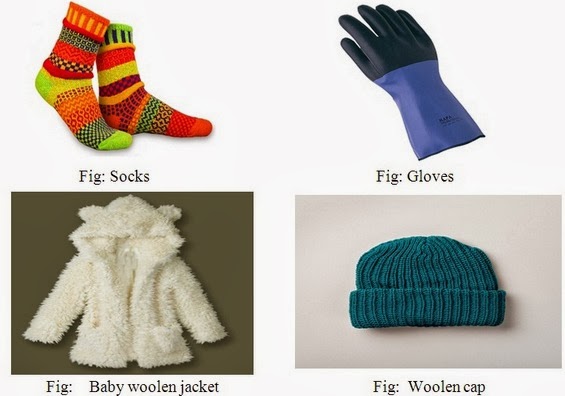
  2. Caps, gloves and hose are also knitted without seams and to approximate the shape of the body allowing stretching the garment to provide a perfect fit. So, different items in shape and size cannot make.
Uses of Integral Construction:
  • Socks,
  • Hose,
  • Gloves,
  • Woolen cap,
  • Baby woolen jacket,
  • Stockings,
  • Pantyhose,
  • Tree-quarter hose,
  • Men’s half hose,
  • Toe socks etc. 

Application of Integral Garments

    Garment Sample Development Process

    Sunday, 9 March 2014

    Garment Sample:
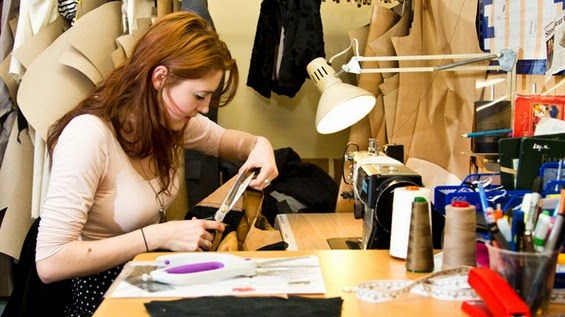
    Garment samples are inevitably important and are developed tested before starting the bulk production. It means making a sample of the garment or fabric which requires to be sold. Sampling is one of the main processes in Garment Industry and it has a vital role in attracting buyers. Because the buyers generally places the order after they are satisfied with the quality of the samples.
     Garment Sample Development Process
    The garment which is need for bulk production is called sample garments. According to specification sheet the sample which is approved by Buyer is called approved sample & the sample which is followed by approved sample is called counter sample. For smooth production it is necessary. Here two type of sample developing process are showing below.

    Sample Developing Procedure:

    1st sample:
    The processes of 1stsample are given in bellow:

    • Receive spec sheet of garments from buyer.
    • Make pattern as per measurement.
    • Check the pattern which has made.
    • If necessary Check shrinkage, twisting, bowing before pattern makingCutting fabric as per pattern.
    • Collect accessories.
    • Start sewing.
    • M/C specified.
    • Check the sample to ensure it, ok.
    • Actual size required.
    • Actual fabric construction.
    • Send it to buyer for approval.
    Development sample:
    After approving of 1stsample, the work of development sample is start. The process of Development sample is given in bellow.
    • Make pattern as per measurement, if buyer change the measurement to observe the counter sample.
    • Actual size required
    • Check the pattern which has made.
    • Collect actual color fabric. G.S.M should be ok.
    • Cutting fabric as per pattern.
    • Collect actual accessories.
    • Start sewing.
    • M/C specified.
    • Check the sample to ensure it, ok
    • Send it to buyer for approval.

    Fabric Weight Measurement Technique

    Monday, 3 March 2014

    FABRIC WEIGHT:
    Fabric weight is a most important characteristics of a fabric .It is required to confirm about the fabric weight of a finish fabric otherwise we cannot revert when garments is made .
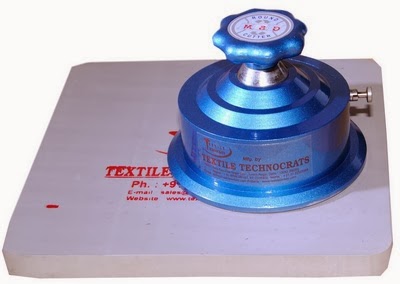
    GSM Cutter
    PURPOSE :
    To make a representative assessment of the mass per unit area in grams per square meter of a fabric.

    APPARATUS:
    1. Circular Sample cutter capable of giving a specimen area of 100cm2+/- 1 cm2.
    2. Weight balance
    3. Cutting board .
    Sample Cutter Check:
    Check your sample cutter by yourself with a simple method .Cut a white page and fold it and measure by mm steel ruler . If it is 112.6 mm and above then your cutter is ok to get accurate result .

    Sample cutter check
    It is a little mathematics  :
    The area of a circle is calculated by multiplying the square of the radius by π (3.141592…)

    So if the diameter is 113 mm, the radius will be 113/2 = 56.5. The area of the specimen you cut will therefore be 56.5 x 56.5 x 3.141592 = 100.29 sq cms.

    You are looking for Grams per Square Meter. The area of

    1 square metre is 100 x 100 square cms = 10,000 sq cms.

    Therefore if you divide 10,000 by the area of the specimen you have cut, you will get

       10,000 / 100.29 

    = a factor of 99.71.

    Therefore if you multiply the weight of the specimen by 99.71 you will get the Grams per Square Meter. Most people multiply by 100, so, when they read the result from the balance they automatically just move the decimal point two places to the left.

    As an illustration suppose the specimen weights 1.85grams, the GSM will be 1.85 x 100 = 185 grams per square metre.

    If you multiplied by 99.71 the result would be 1.85 x 99.71 = 184.46 grams per square metre.

    Because of variations in the cutting performance of different fabrics the O.29grams does not really play a significant role in the accuracy of the test result and most performance requirements anyway give a tolerance of maybe +- 2/3%.

    Different Types of Washing Machine

    Saturday, 1 March 2014

    Garment Washing: 
    The technology which is used to modify the appearance, outlook comfort ability and fashion of the garments is called garment washing.

    Objects of Garment Washing:
    Garment washing is the best touch of a garment. Same type of garments can produce several effects for several wash.

    1. To create wash look appearance, seems the new touch of fashion.
    2. By the washing technique, faded/old, color or tinted affect .
    3. Washing technique creates new fashion such as tagging, grinding, destroy, blasting, whickering, permanent wrinkle, deep dye, tie dye, p.p spray, hand crapping, p.p spoonzing etc.
    4. To reduce size materials that imports soft hand feels.
    5. To attraction the customers/buyer by different types of fashionable washing and market development.
    6. Due to washing, shrinkage occurs in the garments. There is no possibility of further shrinkage of the wash garments.
    7. Any dirt, spot or germ if added in the garments during manufacturing is also removed due to washing.
    What is Washing Machine?
    Washing machine is the machine used to wash the various types of clothes without applying any physical efforts. With washing machine you don’t have to rub the clothes with hand or squeeze them to remove the water from them. The washing machine is also called as clothes washer or simply the washer.

    Type of Garment Washing Machine:

    1. Front Loading Washing Machine.
    2. Side Loading Washing Machine.
    3. Top loading washing machine.
    4. Stone Washing Machine.
    5. Semi-automatic washing machine.
    6. Fully automatic machine.
    Front Loading Washing Machine:
    Front Loading Washing Machine
    Features of Front Loading Washing Machine:
    • Available with complete stainless steel inner & outer drum Front door.
    • Long lasting rust free operation.
    • Auto timed, auto reverse, auto temperature control.
    • Auto Water Level Control
    • Electrically operated water & steam valves.
    • Separate motors for wash & extract.
    • Ideally suited for laundry wash & stone wash.
    • Easy loading & unloading through large toughened glass door
    Side Loading Washing Machine:
    Side Loading Washing Machine
    Features of Side Loading Washing Machine:
    • Electrically & mechanically interlocked, S.S.Loading & Unloading doors
    • Drive : Heavy duty motor co-ordinates with gear box, Pully V Belt drive
    • Electrical Control : Well protected for performance auto timed, auto reverse & auto digital temperature control
    • Protective device against single phasing, reverse phasing and motor overload
    • Gauge glass cork pair for water level indication.
    • Front display of controls through pilot lamps, push buttons, water level indication etc.
    • Electric, Steam or thermal fluid heated
    • Automatic features like auto timed, auto reverse, auto temperature controller with inching devise.
    • Side Loading, open pocket, single & Double door, ideal for larger laundries
    • Performs all Type of wash with soap, detergent, bleaching, acid, stone or any chemical wash including dying
    • Ideally suited for Denim/Stone Washing, Enzyme Washing, Garment Dying & Bleaching, Softening, Milling Operation (for woolens)
    • Interlocking system for main door opening for extra safety
    Top loading washing machine:
    In this washing machine the clothes are loaded from the top of the washing machine. There is a cover at the top that helps loading and unloading of clothes in the round vessel that perform the function of the washer as well as the rinser and drier in the fully automatic washing machine.

    Top loading washing machine
    Stone Washing Machine:
    Stone Washing Machine
    Object of Stone Washing:
    • To create or produce irregular fading or old looking affect on garments.
    • To remove dust, oil spot, impurities from the garments.
    • For soft felling to wear the garments i.e; to improve softness.
    • To achieve the buyer washing standard.
    Differences Between Front and Side Loading Washing Machine:
    The main difference between a side loading and front loading washing machine is how the clothes are placed inside. A side loading machine has a hinged lid on side, allowing the clothes to be placed inside a horizontally-oriented watertight tub. In the center of this tub is a device called an agitator. The agitator’s job is to swirl the clothes through the soapy water. A front loader has no central agitator, but uses gravity and side-mounted paddles to agitate clothes. Once the front door is closed, it remains locked mechanically until the washing cycle is complete.

    Advantages of Garment Washing:

    • Starch materials is present in the new fabrics of he new garment are removed, hence feels soft during use.
    • Softness feeling of garments could be further increased. Washed garment could be wear directly after purchase from store.
    • Fading affect is produced in the garment in regular or irregular pattern.
    • Fading affect could be produced in the specific area of the garment as per specific design.
    • Different outlook of garment could be produced in the garment by different washing techniques.
    • Similar outlook can be produced in the garments by different washing techniques.
    • Initial investment cost to set up a garment washing plant is comparatively lower.
    • Dirts and spots if present in the garment are romoved.
    • Shrinkage occurs in the garment washing, hence no possibility of further shrinkage.
    Parts of the Washing Machine And their Working:
    Parts of the Washing Machine
    1. Water inlet control valve
    2. Water pump
    3. Tub
    4. Agitator or rotating disc
    5. Motor of the washing
    6. Timer
    7. Printed circuit board (PCB)
    8. Drain pipe
    How to Use Your Washing Machine:
    • Select a wash temperature that’s as close as possible to the maximum wash temperature on the care label.
    • Choose the proper spin programme.
    • Put detergent in the machine.
    • Put the dirty items in the machine.
    Note: Don’t overload the machine

    Warping Calculation | Calculation for Direct Warping and SectionalWarping

    Warping:
    The warping consists of collecting predetermined number of ends from a set of wound package and transferring them in a sheet form to a weavers beam. The parallel winding of warp ends small package (bobbin) to a common package (warp beam) is called warping.

    Or,

    The operation of winding warp yarns to a beam usually in preparation for sizing, weaving or warp knitting is called warping.
    Warping
    I have published lots of article on warping. You can find at warping category. Now I will discuss on warping calculation both direct warping and sectional warping.

    Warping Calculation:
    Production = Surface speed of drum × π × Dia. of drum × Creel Capacity

    Warping calculation related to warp beam preparation is done by the following process.

    Total no of ends = EPI x Fabric Width
    Creel capacity = Total number of ends/number of warp beam required
    No. of warp beam = Total ends/creel capacity
    Ends per beam = Total no of ends/no. of warp beam

    A Typical Calculation for Direct Warping:

    Total no. of ends = EPI x fabric width
                                 = 100 x 116 
                                 = 11600 

    No. of warp beam = Total no of ends /creel capacity
                                  = 11600/580 (Creel Capacity is available up to 656)
                                  = 20 

    The no. of cone available in a packet is 24 & total weight of the packet is 100 lbs.

    Now 1 cone weight = 100/24 

                                   = 4.16 lbs.
                                   = 4.16/0.04 kg
                                   = 1.88 kg

    Now 1 cone length = Warp Count x Cone wt. in lbs x 840 
                                   = 40 x 4.16 x 840 
                                   = 139776 yds
                                   = 139776/1.0936 m
                                   = 127812.73 m

    Length Variation = 127812.73 m x 5% (If length variation is 5%)
                                 = 6390.64 m

    So, yarn length in 1 cone = Calculated length – length variation
                                              =127812.73 m – 6390.64 m
                                              = 121422.90 m

    Length of yarn per warp beam = Total length in 1 cone/no of warp beam
                                                       = 121422.90/20 
                                                       = 6071 m

    Now this length will be fixed in warping machine & each time the warp sheet will be cut off after reaching the fixed length wound on the beam. In this way warp beams will be wound continuously. Then it goes to sizing section.

    Production = Surface speed of drum × π × Dia. of drum × Creel Capacity
                       = 20.65 × 3.1416 × 30” × 580 
                       = 1128808.3 inch/ min
                       = (1128808.3/39.37) × 60 m/hr
                       = 1720307.3 m/hr

    A Typical Calculation for Sectional Warping:
    Available Creel capacity = 560 
    Total no. of ends per pattern = 42 

    So, no. of pattern per section = Creel Capacity/Total ends in pattern
                                                     = 560 / 42 
                                                     = 13.33 
                                                     ≈12 pattern (As required)

    Creel to be used = Total pattern x Total ends in pattern
                                = 12 x 42 
                                = 504 

    Total section = Total Ends / Creel used
                          = 7000 / 504 
                          = 14 sections

    Production = Surface speed of drum × π × Dia. of drum × Creel Capacity
                       = 20.65 × 3.1416 × 30” × 504 
                       = 980895.48 inch/ min
                       = (980895.48/39.37) × 60 m/hr
                       = 1494887.7 m/hr

    Dimensional Stability to Washing

    Friday, 28 February 2014

    Dimensional stability:
    Dimensional stability is the vital characteristics of a fabric. It is required to confirm about the dimensional stability of a dyed fabric. The measured dimensional stability of a fabric determines whether a fabric has the potential to retain its original shape and remain stable, indicating it will not bubble or sag over time, when applied over a substrate, and its suitability for a specified use.

    Method  : BS EN ISO 3759:1995, BS EN ISO 6330:2001 

    Purpose  : To determine the changes in dimension and appearance of fabrics and garments to specific cleansing procedures.


    Apparatus:
    1. Marker pens (texpen, dalo or laundry pen)
    2. Calibrated steel rules of appropriate lengths graduated in cm and mm.
    3. Calibrated tape measure.
    4. Ballast (Polyester make weights 200*200 mm).
    5. Wascator washing machine.
    6. Domestic tumble dryer.
    7. Elna press (or similler).
    8. Domestic steam iron.
    9. Non Phosphate Detergent A, Sodium Perborate and TAED in a 77:20:3 ratio.
    Specimen Preparation and Measurement:
    • Cut a fabric specimen 500*500 mm with the edges parallel to the length and width of the fabric. A template can be employed to assist this preparation, on these occasions align one vertical edge parallel to the length threads (ends). 

    • Mark three pairs of reference marks in the length direction and three pairs in the width direction of the specimen such that each pair is approximately 350 mm apart (See the Diagram Below). Do not cut specimens closer than 50 mm to a selvedge or cut edge. Mark the warp (length) direction in the top left hand corner. 

    • Lay the specimen flat and without stretching measure the distance between each pair of reference marks to the nearest mm. 

    • Record each measurement in order L1, L2, L3, W1, W2, and W3. 

    • Over lock all four sides of the specimen to prevent fraying, 

    • For woven crinkle fabrics two 500 mm square specimens with reference marks 350 mm apart, measure the distance between the marks as in 2.1.3. Over lock the two pieces of fabric together down both length sides and over lock open both ends of tube of fabric, to prevent fraying. This preparation is to assist ironing which is a general requirement of woven crinkle fabrics.
      Sample
      Re-measurement and Appearance Assessment:
    • After the appropriate cleansing and drying procedure lay the specimen flat and without stretching, preferably in a conditioned atmosphere for a minimum of 4 hours (wool products 16 hours).
    • After conditioning the sample measure the distance between each pair of reference marks.
    • Record the appropriate measurement alongside the original measurement.